
Krystal 2000 is a one-component, high-viscosity (5000 to 7000 cps) UV and visible-light curable adhesive for bonding glass, acrylic, polycarbonate, ABS and some metals. It cures in seconds under a 365 nm UV source, sets clear and non-yellowing, and holds from -40 C to +120 C. The high viscosity suits vertical joints and small gaps where a thin UV adhesive would run, which is why it is used for glass furniture, display assembly and outdoor signage.
PRODUCTS · UV ADHESIVE
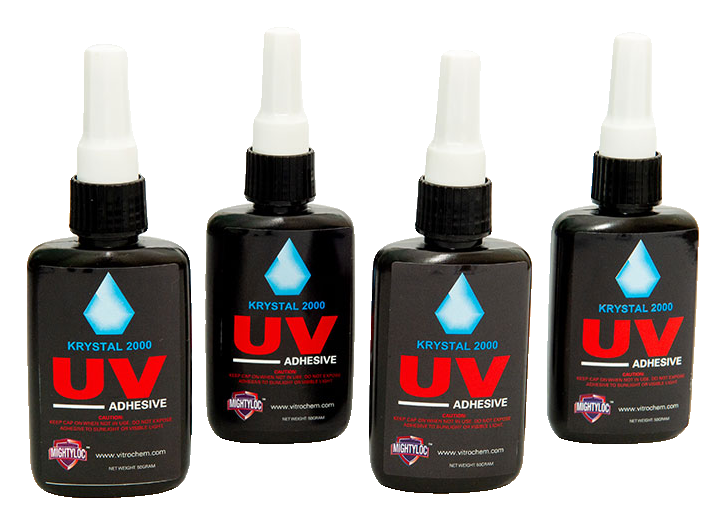
Krystal 2000
Photo-curing UV adhesive that cures in seconds under UV (365 nm) or visible light, non-yellowing, bonding glass, acrylic, polycarbonate, ABS and some metals.
Sibling products: Krystal 1000 Krystal 3000
UV AdhesiveMetalPlasticsGlass
Service temp
-40 to 120 °C
Cure speed
On UV exposure
Headline properties from the Krystal 2000 Technical Data Sheet. Refer to the current TDS for full specification.
Specifications last reviewed
Specifications
| SKU | 2000 |
|---|---|
| Chemistry | Acrylic Resin (UV-curable) |
| Appearance | Clear liquid |
| Viscosity | 5000-7000 cps at 25°C |
| Fixture time | On UV exposure |
| Full cure | 10-15 s under 365 nm UV |
| Service temperature | -40°C to 120°C |
| Shelf life | 1 year |
| Packaging | 50 mL & 1 L anti-UV bottle |
Substrate compatibility
- Metal
- Plastic
- Glass
Technical Data Sheet
Download the current Technical Data Sheet for full specification, handling, and cure data. The complete TDS library cross-references every MightyLoc family by chemistry, substrate, and service window.
Compliance
RoHS statements and Safety Data Sheets for this product are available on request. Contact the MightyLoc team and we will send the current documents.
Glass bonding · 3 points
01 / 03
Apply to the joint
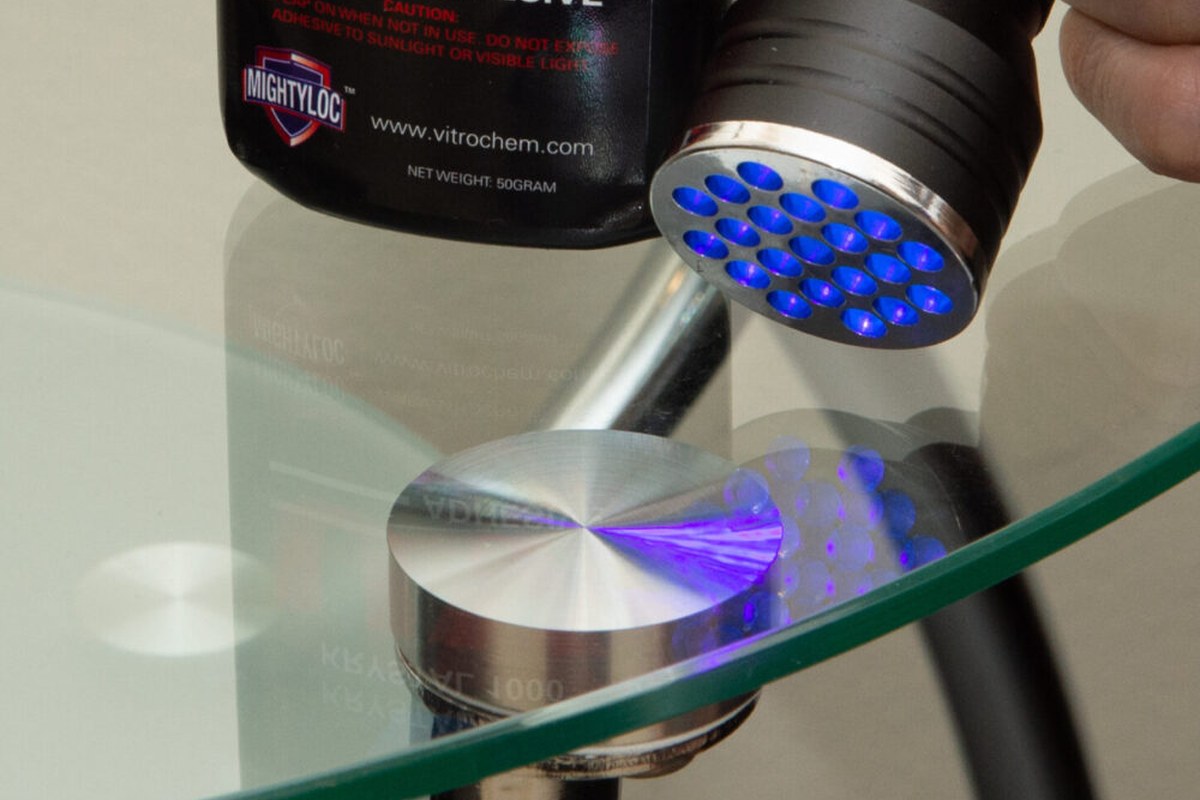
Run a thin film along the joint, close the parts, then cure with UV light passing through the transparent glass, acrylic or polycarbonate part.
02 / 03
UV cure
Align the parts while the film is still wet, since it stays workable until light reaches it. Hold a UV lamp close over the joint and let the light pass through the clear part to fixture the bond.
03 / 03
Clear finish
Apply a thin film so only a little squeezes out, then wipe the excess from the edges before you cure. This grade resists yellowing over time, so the cured joint stays water-clear with almost no visible glue line.
Tap a point on the image to see where and how to apply.

Display & crafts · 3 points
01 / 03
Invisible joints
Ideal for bonding glass, clear acrylic and polycarbonate parts in signage and furniture, so the join disappears into the material.
02 / 03
Clear assemblies
Bond clear glass, acrylic and polycarbonate parts where the join must stay invisible. Keep the film thin and even across the mating face, and because this grade resists yellowing the bond stays clear over time.
03 / 03
High clarity work
Bonds clear glass, acrylic and polycarbonate parts, suited to intricate signage and furniture work where high clarity matters.
Tap a point on the image to see where and how to apply.
Application guidance last reviewed
Technical tools: Cure-time guide Service-temperature guide Substrate-pair selector
Frequently asked questions
Krystal 2000 is a one-component, high-viscosity UV and visible-light curable acrylic adhesive for bonding glass, acrylic, polycarbonate, ABS and some metals. Its 5000-7000 cps viscosity makes it well suited to vertical surfaces, wider gaps and outdoor signage or glass decoration where it resists yellowing.
Krystal 2000 has a high viscosity of 5000-7000 cps, measured at 25 C on an S14 spindle at 100 rpm. This thick, syrup-like flow lets the adhesive stay in place on vertical joints and bridge larger gaps, unlike the water-thin Krystal 3000 (5-15 cps) used for tight capillary joints.
Krystal 2000 will not turn yellow when exposed to heat at 80 C and offers good water and weather resistance, per the Vitrochem TDS. This non-yellowing behaviour is why it is chosen for outdoor signage and glass decorations, where the cured bond stays clear over time at its rated -40 C to +120 C service range.
Cured Krystal 2000 is rated for a service temperature range of -40 C to +120 C per the Vitrochem TDS, the widest of the Krystal UV line. Its glass transition temperature is -16 C and the cured film reaches Shore D 67 hardness, giving good thermal and shock resistance for demanding assemblies.
Krystal 2000 sets and cures within seconds when exposed to UV light at 365nm or visible light at 436nm. The Vitrochem TDS lists a recommended cure time of 10-15 seconds at a UV intensity of 1500-3000 mJ/cm2. One bonded surface must be transparent so the light can reach and polymerise the adhesive.
Krystal 2000 cures to a hard Shore D 67 film with good thermal and shock resistance, and the Vitrochem TDS lists it for bonding glass, acrylic, polycarbonate, ABS and some metals. The cured adhesive shows 173% elongation, helping it absorb impact and thermal movement in glass-to-metal and signage assemblies.
Krystal 2000 has a 1-year shelf life in its original, unopened container when stored between 15 C and 25 C, away from direct light, per the Vitrochem TDS. Keep it cool, dry and below 25 C, and shield opened bottles from light. It is supplied in 50ml and 1-litre anti-UV bottles.
Krystal 2000 is the high-viscosity grade at 5000-7000 cps with a -40 C to +120 C range, while Krystal 1000 is medium (650-1050 cps, -40 to +100 C) and Krystal 3000 is low (5-15 cps, -40 to +100 C). All three are 365nm UV-curable acrylics; choose Krystal 2000 for gap fill, vertical joints and the highest temperature rating.