Industries · SIGNAGE
Bonding solutions for signage.
Sign fabricators and display builders face four bonding problems: visible fasteners that undercut clean aesthetics, clear faces that must bond without a visible glue line, outdoor exposure that degrades ordinary adhesives, and thermal movement between metal frames and acrylic or glass faces. MightyLoc covers these with acrylic foam tapes, UV-cure adhesives, a structural methacrylate, an MS polymer sealant, and a spray adhesive.

Recommended products
MightyLoc products for Signage
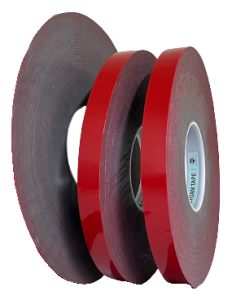
AFT 1080GF
Acrylic Foam Tape
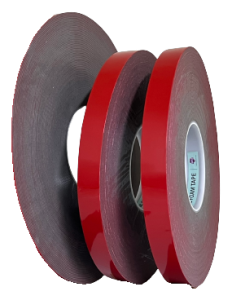
AFT 1120GF
Acrylic Foam Tape
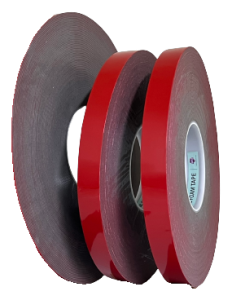
AFT 1200GF
Acrylic Foam Tape
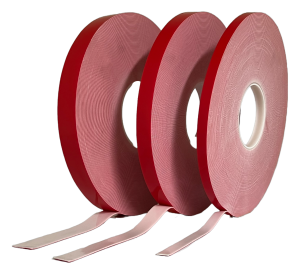
AFT 2064WF
Acrylic Foam Tape
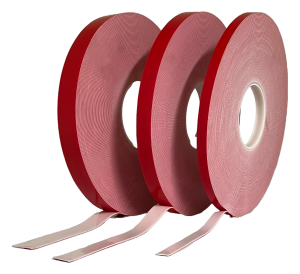
AFT 2120WF
Acrylic Foam Tape
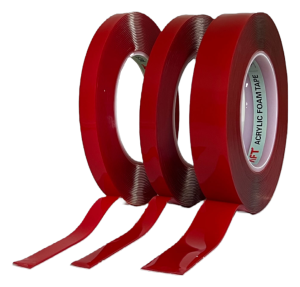
AFT 3100CF
Acrylic Foam Tape
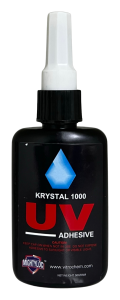
Krystal 1000
UV Adhesive
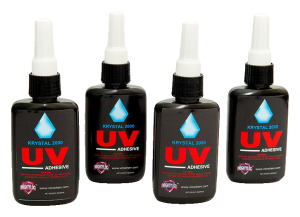
Krystal 2000
UV Adhesive
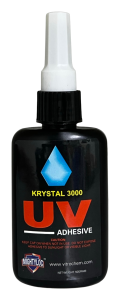
Krystal 3000
UV Adhesive
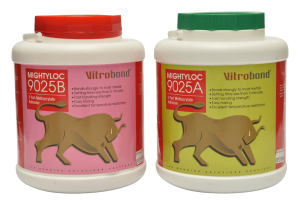
MightyLoc 9025
Methacrylate
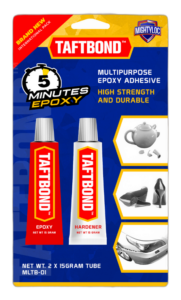
Taftbond
5 Minutes Epoxy

TaftGrip
MS Polymer
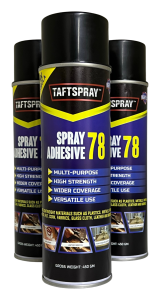
Taftspray 78
Spray Adhesive
Not sure which to choose?
Tell us your substrates and service conditions; we will point you to the right chemistry.
Talk to our teamCore bonding challenges in sign and display fabrication
Channel letters, light boxes, fascia panels, and built-up lettering share a common constraint: the bond must be structurally sound without introducing visible hardware. Screws and rivets create stress concentrations in thin acrylic faces and leave visible marks on finished surfaces. A second problem is thermal movement. A metal frame and an acrylic face bonded together have different coefficients of thermal expansion; sunlight and internal LED heat widen that gap. A rigid bond cracks or delaminates under repeated cycling. Outdoor signs also face rain, UV radiation, and sustained heat, so the adhesive must retain its properties across a wide service-temperature range and resist UV-driven degradation over years of exposure. Bonding dissimilar substrates, such as aluminium extrusions to glass or polycarbonate, adds the challenge of differing surface energies and the need for adhesion without heat distortion.
Which product suits which job
For structural mounting of metal faces, returns, and panels where the bond line will be hidden, grey acrylic foam tapes (AFT 1080GF, AFT 1120GF, AFT 1200GF) replace screws and rivets and their viscoelastic cores absorb differential thermal expansion and vibration. AFT 1080GF carries a 180-degree peel strength of 3000 g/25mm with a service range of -10 to +90 C (brief excursions to +120 C). AFT 1200GF at 2.0 mm is the thickest grey grade and bridges larger gaps or conforms to uneven substrate surfaces. Where the bond line will be visible against a white substrate or light-coloured panel, the white grades AFT 2064WF (0.64 mm, low-profile) and AFT 2120WF (1.2 mm, 3200 g/25mm peel, -10 to +90 C) keep the bond line discreet. For transparent faces, acrylic panels, or glass where the adhesive must disappear, AFT 3100CF is a clear 1.0 mm foam tape with optical clarity and a peel strength of 2000 g/25mm. UV-cure adhesives Krystal 1000, Krystal 2000, and Krystal 3000 suit glass-to-glass or glass-to-acrylic joints where a water-clear, near-invisible bond is required; Krystal 3000 at 5 to 15 cps wicks into tight close-fitting joints by capillary action, while Krystal 2000 at 5000 to 7000 cps holds position on vertical joints before cure. For heavy structural joints between dissimilar metals, or where fastener-free attachment of aluminium extrusions to substrates is required, MightyLoc 9025 two-part methacrylate delivers a lap shear strength over 50 kg/cm2 with a continuous service range of -40 to +150 C. TaftGrip MS polymer sealant handles perimeter sealing and flexible joints where a paintable, weather-resistant elastomer is needed. For laminating graphics, mounting foam substrates, or tacking display materials, Taftspray 78 aerosol spray adhesive is polystyrene-safe with fast dry and low mist.
Specifying the right product: what fabricators need to confirm
Tape selection depends on substrate type, gap size, and whether the bond line is visible. The grey AFT grades run up to 2.0 mm (AFT 1200GF), with AFT 1120GF at 1.2 mm; choose the thicker grade when surfaces are not perfectly flat or when a larger gap needs bridging. For clear bonds with AFT 3100CF, confirm the substrates are glass, clear acrylic (PMMA), or metal; optical clarity depends on a clean, contaminant-free surface with appropriate primer where the substrate surface energy is low. UV-cure adhesives require a UV source at 365 nm or access to adequate daylight. Krystal 2000 also responds to visible light at 365 nm, which can be useful when UV access is limited. Curing speed depends on UV intensity and dose, not just exposure time, so a calibrated lamp is recommended for production-volume work. All three Krystal grades are rated to -40 C at the cold end, with Krystal 2000 reaching +120 C at the upper limit. Surface preparation applies to all chemistries: remove oils, dust, and release agents, consider a wipe with isopropyl alcohol, and check TaftGrip primerless adhesion against your specific substrate before full production runs, as some plastics may benefit from a light abrade or primer. TaftGrip skins in 5 to 10 minutes and reaches full cure in 7 days; plan assembly sequences accordingly.
Outdoor service and weather durability
Signs installed on building facades or freestanding structures face UV radiation, moisture ingress, and temperature swings that can range from sub-zero overnight lows to surface temperatures above ambient on sun-facing panels. Acrylic foam tapes in the AFT range are designed for long-term outdoor structural bonding; AFT 1080GF, AFT 2120WF, and AFT 3100CF are rated from -10 to +90 C, while the Krystal UV-cure adhesives reach -40 C at the cold end. MightyLoc 9025 methacrylate covers -40 to +150 C continuously and handles brief excursions to +200 C for under 20 minutes, making it appropriate for signs near heat sources or in high-ambient-temperature outdoor environments. TaftGrip MS polymer sealant is non-corrosive, free of solvents and silicones, and moisture-cures to a durable elastomer rated to +90 C, suitable for perimeter sealing on outdoor light box frames. Krystal 2000 is non-yellowing and Krystal 3000 cures colourless and transparent in thin films, which matters for clear acrylic or glass faces where any colour shift in the adhesive would be visible over time. Confirm current TDS values before specifying for any application with long-term outdoor exposure requirements.
FAQ · SIGNAGE
Questions signage teams ask.
Yes. Grey acrylic foam tapes in the AFT 1080GF, AFT 1120GF, and AFT 1200GF grades are designed for structural double-sided bonding on metal, aluminium, stainless steel, acrylic, and glass and are a direct mechanical-fastener replacement in this application. AFT 1080GF carries a 180-degree peel strength of 3000 g/25mm. Confirm the current TDS for surface preparation requirements and minimum application temperature before use.
Two options suit clear acrylic: AFT 3100CF, a 1.0 mm clear acrylic foam tape with optical clarity rated for glass and PMMA, and the Krystal UV-cure range (Krystal 1000, 2000, 3000) for water-clear bonds, where Krystal 3000 cures colourless and transparent in thin films and Krystal 2000 is non-yellowing. For tight-fitting joints where the adhesive must wick in by capillary action, Krystal 3000 at 5 to 15 cps is the lowest-viscosity option. Confirm substrate compatibility and surface prep against the current TDS.
Krystal 2000 cures under UV and visible light at 365 nm, so adequate daylight can initiate cure. Krystal 1000 and Krystal 3000 require UV exposure. In a production environment, a calibrated UV lamp ensures a consistent cure dose and set time. Without sufficient UV intensity, cure will be incomplete. Always test cure completeness on your substrate before committing to a production run.
MightyLoc 9025 two-part methacrylate structural adhesive is designed for this class of joint. It replaces spot welding on metal and joins dissimilar metals without heat distortion, with a lap shear strength over 50 kg/cm2 and a continuous service temperature of -40 to +150 C. AFT 3100CF clear foam tape is an alternative for lower-load applications where optical clarity is the priority. Confirm bond area and load requirements against the current TDS.
Taftspray 78 multipurpose aerosol spray adhesive is polystyrene-safe, fast-drying, and produces low mist, making it practical for laminating graphics and mounting foam-based display substrates. For any substrate that includes polystyrene foam or PS-based sheet, confirm compatibility with the current TDS before full production use.
TaftGrip MS polymer sealant is a one-component moisture-cure adhesive sealant that cures to a durable, paintable elastomer. It is non-corrosive, solvent-free, and free of silicones, which avoids contamination issues if the surrounding surface is to be painted or re-bonded. It skins in 5 to 10 minutes and reaches functional cure at 24 hours, with full cure at 7 days. Service temperature is -40 to +90 C. Confirm substrate adhesion against the current TDS, as some plastics may benefit from surface preparation.