
Industries · CONSTRUCTION
Bonding solutions for construction.
Construction bonding involves substrates that move, surfaces that are rarely flat, and weather that tests every joint year-round. MightyLoc supplies acrylic foam tapes for structural facade bonding, polyurethane sealants for movement and expansion joints, and an MS polymer adhesive sealant for mixed-substrate work where primers and solvents are impractical.

Recommended products
MightyLoc products for Construction
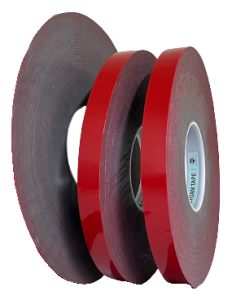
AFT 1080GF
Acrylic Foam Tape
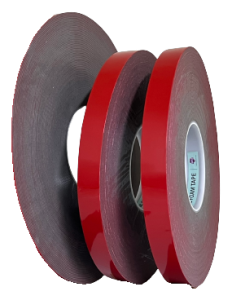
AFT 1120GF
Acrylic Foam Tape
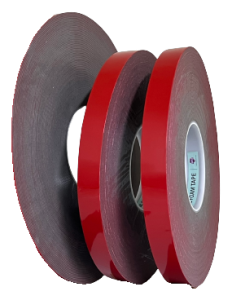
AFT 1200GF
Acrylic Foam Tape
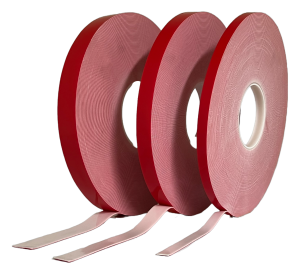
AFT 2064WF
Acrylic Foam Tape
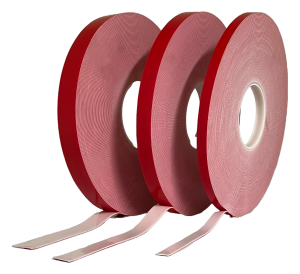
AFT 2120WF
Acrylic Foam Tape
Taftflex 6221
Polyurethane Sealant
Taftflex 6292
Polyurethane Sealant

TaftGrip
MS Polymer
Not sure which to choose?
Tell us your substrates and service conditions; we will point you to the right chemistry.
Talk to our teamBonding and sealing challenges in construction
Construction projects bond and seal across a wide range of substrates: aluminium composite panels, structural steel, concrete, glass curtain walls, fibreglass cladding, and timber framing. Each pairing introduces different surface energy, porosity, and movement coefficients. Facade panels expand and contract through daily thermal cycles; the joint between a metal panel and a concrete substrate must accommodate that movement without cracking or delaminating. Expansion joints in concrete slabs and podium decks are designed to flex; any sealant that cures rigid will fail under repeated cycling. Tropical conditions compound this: continuous UV exposure degrades some polymer chemistries, and heavy seasonal rainfall tests every adhesive-free edge. Visible fasteners on facade panels create thermal bridges and require additional finishing work; a continuous adhesive bond line distributes wind load across the full panel area and removes the fastener entirely.
Matching products to the job
Acrylic foam tapes are suited to panel-to-panel and panel-to-frame bonding where a structural, continuous bond is required. AFT 1080GF delivers 180-degree peel strength of 3000 g/25mm and handles service temperatures from -10 to +90 C, with brief excursions to +120 C. For wider gaps or curved facade surfaces, AFT 1200GF at 2.0 mm thickness bridges surface variation without losing contact. On white-faced panels or visible bond lines, AFT 2120WF provides 3200 g/25mm peel strength across a service range of -10 to +90 C. For expansion joints and perimeter sealing, Taftflex 6292 is a low-modulus polyurethane sealant with around 600 percent elongation at break, suited to concrete expansion joints and movement-heavy perimeter details. It bonds to concrete, metal, glass, wood, and fibreglass. Where substrates are mixed and priming is impractical, TaftGrip (MS polymer) cures moisture-activated and bonds without primers, solvents, isocyanates, or silicones.
Substrate preparation and cure planning
Surface preparation is the highest-leverage step in any bonded assembly. For acrylic foam tape, mating surfaces should be clean, dry, and free of mill scale, oxide layers, release agents, and dust. Isopropyl alcohol wiping is a standard starting point; primers may be needed on low-energy or heavily oxidised substrates (confirm against the product TDS). Acrylic foam tapes build initial handling strength on application under firm pressure, and full adhesion develops over time; apply pressure at lay-up where possible and confirm the bond-build profile against the product TDS. For sealant joints, joint width-to-depth ratios determine cure depth; Taftflex 6292 cures at approximately 3 mm per 24 hours with atmospheric moisture. Deep joints require backing rod to control depth and prevent three-sided adhesion. TaftGrip skins in 5 to 10 minutes, reaches functional cure in 24 hours, and achieves full cure in 7 days; plan overcoating and loading schedules accordingly.
Paintability, finish, and long-term service
A finished joint on an exterior facade or interior feature wall often needs to be painted. Taftflex 6221, Taftflex 6292, and TaftGrip are all paintable after cure; confirm compatibility with the intended topcoat system before application, as some coatings need additional cure time or a sealer coat. Taftflex 6292 is also non-staining, which matters where the sealant contacts porous stone or concrete that will not be painted. For tape bonds, grey grades (AFT 1080GF, AFT 1120GF, AFT 1200GF) are concealed behind panel faces; white grades (AFT 2064WF, AFT 2120WF) are used where the bond line may be partially visible against light-coloured panel systems. The polyurethane and MS polymer products share a lower service limit of -40 C, which is relevant for cold-storage construction and refrigerated logistics facilities across Southeast Asia.
FAQ · CONSTRUCTION
Questions construction teams ask.
In many panel systems, a continuous acrylic foam tape bond distributes load more evenly than point fasteners and eliminates thermal bridges. AFT 1080GF and AFT 2120WF both deliver structural peel strength. Suitability depends on panel weight, wind load specification, substrate preparation quality, and service temperature. Confirm against the relevant structural calculation and the current Technical Data Sheet for the specific grade.
Taftflex 6292 is the indicated choice. It is a low-modulus polyurethane sealant with around 600 percent elongation at break, which accommodates the cyclic movement in concrete expansion joints. It is weather and tear resistant, non-staining, and paintable, and bonds to concrete, metal, glass, wood, and fibreglass. Confirm joint geometry, movement range, and substrate condition against the current Technical Data Sheet before specifying.
Taftflex 6292 and TaftGrip both operate from -40 C to +90 C. Taftflex 6221 operates from -40 C to +80 C. Acrylic foam tapes AFT 1080GF and AFT 2120WF are rated -10 to +90 C, with AFT 1080GF tolerating brief excursions to +120 C. Always verify the specific grade against the current Technical Data Sheet, as specifications may be updated.
TaftGrip is formulated for strong primerless adhesion to many substrates. It is also free of solvents, isocyanates, silicones, and PVC, which simplifies handling in occupied or restricted-ventilation work areas. On some difficult or low-energy substrates, a primer may improve long-term adhesion. Confirm the specific substrate combination and surface condition against the current Technical Data Sheet before committing to a primer-free approach.
Taftflex 6292 cures at approximately 3 mm per 24 hours with atmospheric moisture. Full surface cure across the joint depth is required before painting. The actual interval depends on joint depth, ambient humidity, and temperature at application. Taftflex 6292 is paintable and non-staining. Confirm the minimum overpainting interval and topcoat compatibility against the current Technical Data Sheet.
AFT 2064WF (0.64 mm, white) and AFT 2120WF (1.2 mm, white) are the white-grade options for visible or partially visible bond lines on light-coloured cladding and facade panels. AFT 2120WF provides 3200 g/25mm peel strength and a service range of -10 to +90 C. Confirm the required thickness for gap bridging against the current Technical Data Sheet for each grade.