When a metal joint must carry real load, the two main reactive structural chemistries are methacrylate (structural acrylic) and epoxy. Choose methacrylate for toughness, peel and impact resistance, tolerance of lightly oily metal, and faster handling. Choose epoxy for very high rigidity, chemical resistance, and gap fill with low shrinkage. Confirm grade selection on the relevant TDS.
Class positioning, not absolute values. Methacrylate times from the MightyLoc 9025 TDS; epoxy figures are typical for the class.
What is a structural adhesive for metal?
A structural adhesive is one engineered to carry sustained mechanical load across a bonded joint rather than just holding parts in place. For metal assemblies, it spreads stress over the whole bonded area instead of concentrating it at rivets, spot welds or screw points, which often improves fatigue life and lets you join thin or dissimilar metals without heat distortion.
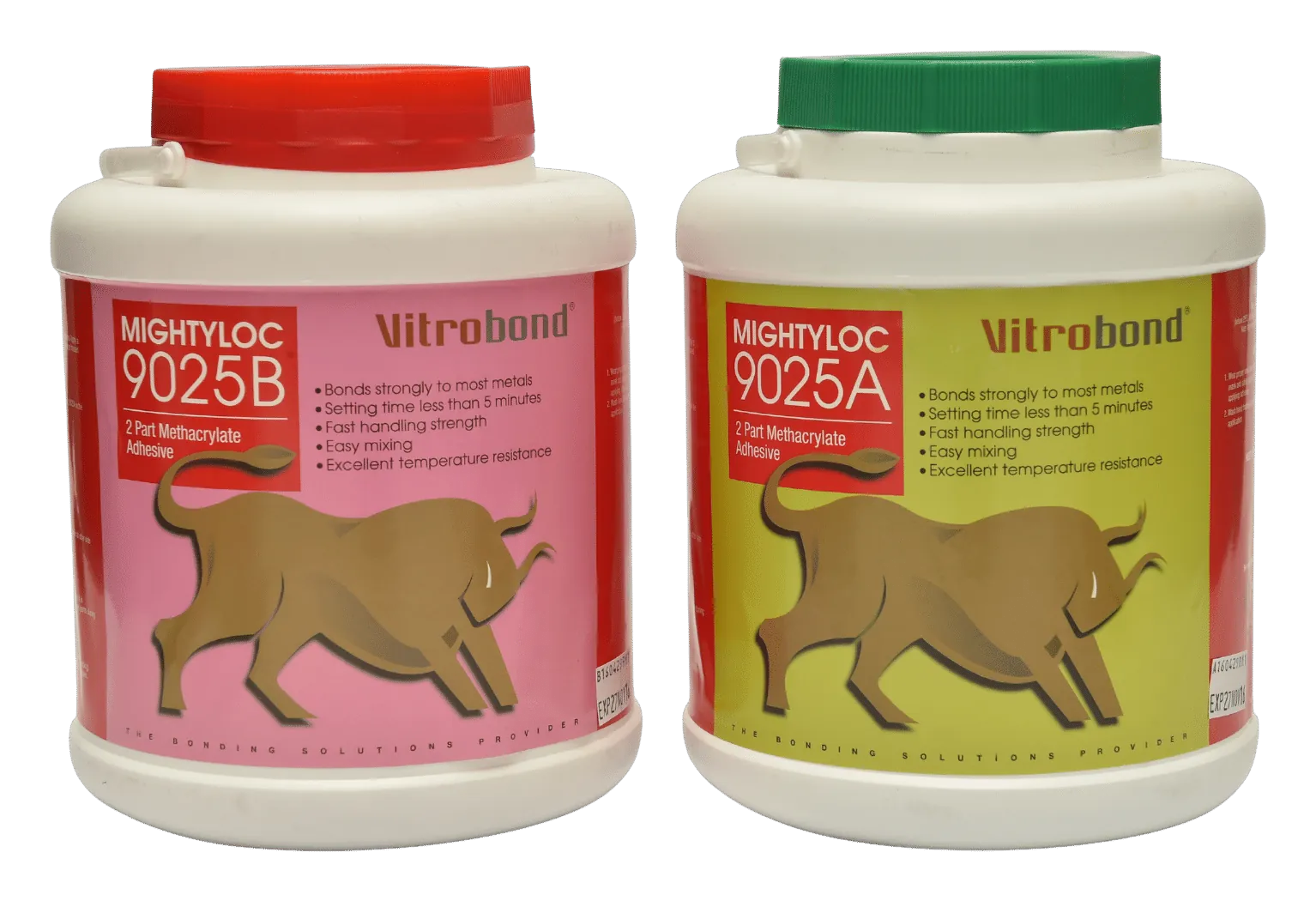
Two reactive chemistries dominate this space: methacrylate (also called structural acrylic, MMA) and epoxy. Both are typically two part systems that cure into a strong thermoset bond. They differ most in toughness, surface preparation needs, rigidity and handling speed. MightyLoc supplies a methacrylate structural adhesive for metal, MightyLoc 9025; epoxy is covered here as a generic chemistry class for comparison.
How does methacrylate compare to epoxy on metal?
Methacrylate structural adhesives combine high strength with toughness, so they resist peel and impact better than rigid epoxy as a class. A practical production advantage is that they tolerate minimally prepared or lightly oily metal surfaces, which reduces cleaning and abrasion steps on the floor. They also tend to handle faster, with quick fixturing.
Epoxy answers with very high rigidity, strong chemical and solvent resistance, and excellent gap fill with low shrinkage. That rigidity is a strength for stiff, high-load joints but it lowers peel and impact resistance compared with a toughened methacrylate. Epoxy generally needs clean, dry, abraded surfaces to reach its full strength, and cure speed ranges from a few minutes to overnight.
Where does each chemistry fit best?
Reach for methacrylate when the joint must survive flexing, vibration or impact, when metal arrives with light mill oil or minimal prep, and when you want to bond dissimilar metals or replace welds and rivets across panels. Its toughness spreads dynamic load well. See the metal fabrication page for typical fabrication uses.
Reach for epoxy when you need maximum rigidity, the highest resistance to solvents and chemicals, or you must fill a larger or uneven gap with low shrinkage, for example in potting and rigid structural bonds. If the assembly will sit in aggressive chemical service or needs a very stiff, dimensionally stable joint, epoxy’s class properties suit it. Match the exact grade and cure schedule to the data sheet.
| Property | Methacrylate (structural acrylic) | Epoxy (two part) |
|---|---|---|
| Cure and mixing | Two part, mix and apply; fast handling and quick fixturing | Two part, mix and apply; cure from a few minutes to overnight by grade |
| Lap-shear strength (per ISO 4587 / ASTM D1002) | High, structural | High, structural |
| Toughness and peel (per ASTM D903 / D1876) | High; good impact and peel resistance | Lower; rigid bond line is more brittle |
| Surface-prep tolerance | Tolerant of minimally prepared or lightly oily metal | Needs clean, dry, abraded surfaces for full strength |
| Gap fill | Good | Excellent, with low shrinkage |
| Rigidity vs flexibility | Tough and somewhat flexible | Very rigid and stiff |
| Chemical resistance | Good | Very high |
| Best use | Load-bearing metal joints under flex, vibration or impact; lightly prepped or dissimilar metals | Rigid high-strength bonds, gap filling, potting, aggressive chemical service |
How to choose
- Start with the load type. If the joint sees peel, impact or vibration, lean methacrylate for its toughness; if it needs maximum stiffness, lean epoxy.
- Check surface condition. If metal arrives with light oil or you want to skip heavy prep, methacrylate tolerates it; epoxy wants clean, dry, abraded surfaces.
- Consider the gap. For a larger or uneven gap with low shrinkage, epoxy fills well; methacrylate handles typical bond lines.
- Weigh chemical exposure. For aggressive solvent or chemical service, epoxy’s resistance is higher.
- Factor handling speed. Methacrylate generally fixtures faster on the line; confirm working and cure times for local tropical conditions on the TDS.
- For the methacrylate route on metal, specify MightyLoc 9025 and confirm strength and service range on the 9025 TDS. For cure and handling planning, see the cure-time guide.
Frequently asked questions
Both reach high, structural shear strength on metal, so neither is simply stronger. The real difference is behaviour: methacrylate is tougher with better peel and impact resistance, while epoxy is more rigid and chemically resistant. Pick by load type and service conditions, and confirm figures on the relevant TDS rather than by headline strength alone.
Methacrylate structural acrylics are tolerant of minimally prepared or lightly oily metal as a class, which saves cleaning steps on the production floor. Epoxy generally needs clean, dry, abraded surfaces to reach full strength. Even with a tolerant adhesive, the surface state affects results, so confirm the prep requirement on the product TDS.
Methacrylate structural adhesives generally handle faster and fixture quickly. Epoxy cure speed varies widely by grade, from a few minutes to overnight. Singapore's warm, humid climate can shift working windows for some chemistries, so confirm working time and full cure on the TDS for local conditions and plan with the cure-time guide.
MightyLoc 9025 is a methacrylate structural adhesive built for metal bonding, with high shear strength on metal and toughness that resists peel and impact. It suits load-bearing assemblies and dissimilar metals where you want to replace welds or rivets. Confirm strength and service range on the 9025 TDS in the [TDS library](/tds/).
This article compares epoxy as a generic chemistry class. For metal structural bonding, MightyLoc's published reactive structural adhesive is the methacrylate [MightyLoc 9025](/products/mightyloc-9025/). For the right grade for your application, contact MightyLoc and confirm selection against the current TDS.